
Erosion & Sediment Control
Riprap Installation
Riprap is a permanent erosion control measure used wherever concentrated flow or wave action would otherwise erode unprotected soil — pipe outfalls, pond spillways, channel linings, and shoreline edges. LES installs graded riprap sized to the design flow velocity, underlain by filter fabric or bedding stone to prevent the soil beneath it from migrating through the voids between rocks.
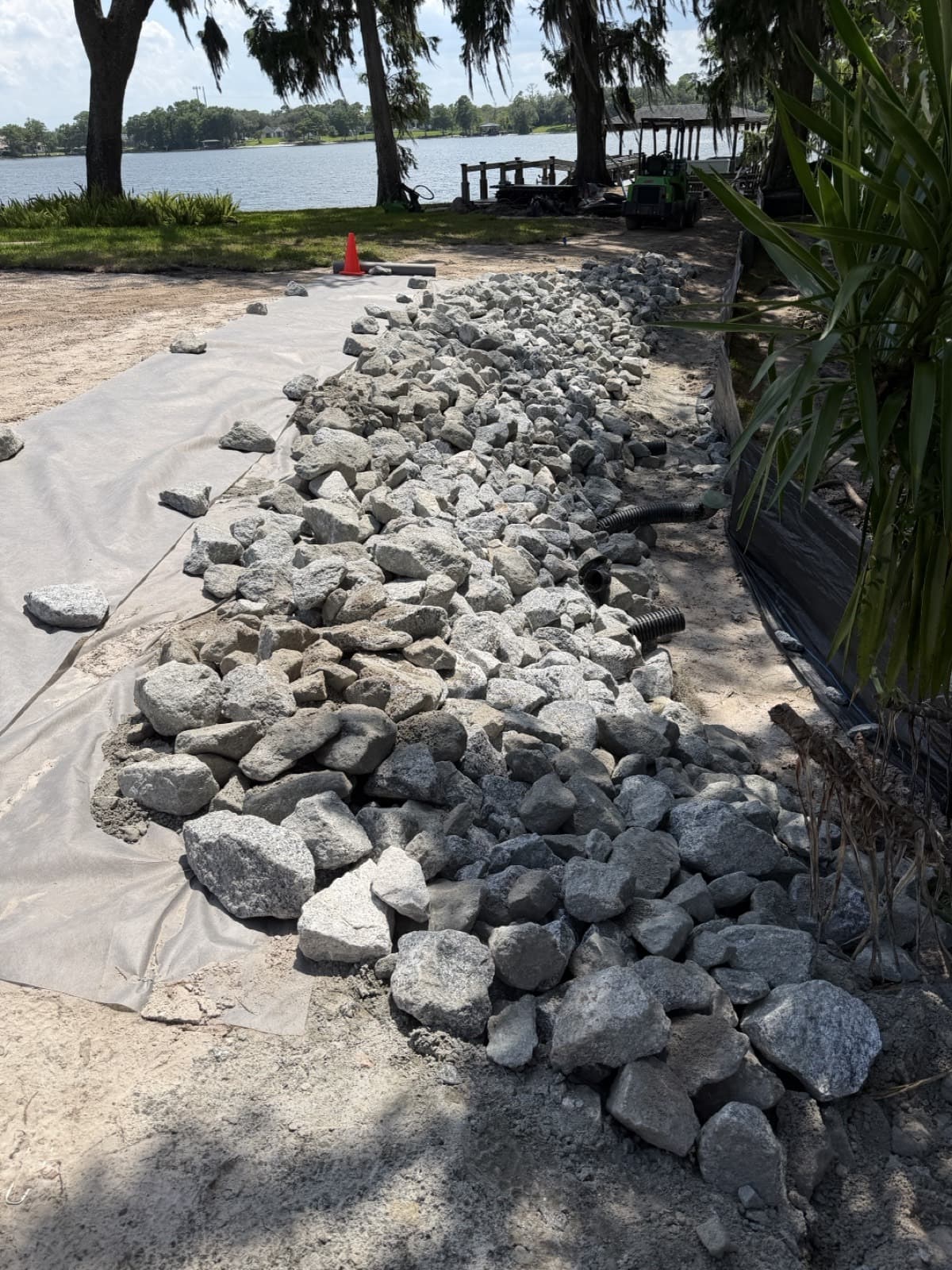
See the full story: Riprap installation on a Central Florida lakefront →
What’s Included
- Flow velocity and design-condition assessment for sizing
- Filter fabric or bedding stone underlayment installation
- Graded riprap placement at pipe outfalls and spillways
- Channel lining installation for concentrated-flow areas
- Shoreline and slope riprap for permanent stabilization
Common Failure Points
- Rock placed directly on soil with no filter fabric or bedding stone underneath
- Gradation undersized for the actual flow velocity at that outfall or channel
- Riprap that looks intact on the surface while soil washes out from beneath it
- Thin, single-layer placement that shifts and exposes soil under storm flow
LES Field Method
- 01Assess flow velocity and design conditions at the specific outfall, spillway, or channel
- 02Install filter fabric or bedding stone underlayment before placing rock
- 03Place graded riprap to design depth and gradation, not a generic mix
- 04Confirm coverage and toe-in at the base of slopes and channel edges
- 05Photo-document the completed installation for the project file
Technical Notes
Riprap that isn't properly sized to flow velocity, or installed without a filter layer underneath, will eventually fail as soil washes out from beneath the rock — the riprap stays in place while the slope or channel erodes underneath it. Correct gradation and underlayment are what make the installation permanent rather than temporary.
Installed. Maintained. Documented.
Every installation, repair, or maintenance visit is photo-documented in the field — so the work holds up under inspection, not just under a good-faith assumption.
- Before, during, and completed-work photos
- Field maintenance notes
- Post-rain observations
- Corrective action tracked through to close-out
- Documentation-ready reports for your compliance file
Related Services
Riprap Installation by Service Area
LES provides riprap installation across Central Florida, including:
Frequently Asked Questions
Why does riprap need filter fabric underneath it?
Without a filter layer, soil migrates up through the gaps between rocks under flow, undermining the slope or channel bank even though the riprap itself looks intact. The fabric or bedding stone keeps the soil in place while still allowing water through.
How is riprap size determined?
Rock gradation is selected based on the design flow velocity at that specific location — an outfall handling high-velocity discharge needs larger, heavier rock than a low-flow channel lining.
Request a proposal for riprap installation
Tell us about your site and timeline — we'll follow up with scope and next steps.
Need erosion control, silt fence, BMP maintenance, or post-rain inspection support? Call 407-502-6476 or request a BMP proposal from Local Environmental Services.